
Yueci Deng (邓岳慈)
Ph.D. Student, School of Data Science, CUHK-SZ
I am a Ph.D. student at the Chinese University of Hong Kong, Shenzhen (CUHK-SZ), supervised by Prof. Kui Jia. I build high-performance simulation systems and learning infrastructure for embodied intelligence, connecting 3D perception, synthetic data generation, and Sim2Real robot learning.
Previously, I led the core engine team at DexForce Technology (Aug 2022 – Aug 2025), building robot simulation, synthetic data, and model training and deployment infrastructure. I hold an M.Sc. in Signal Processing from NTU, Singapore, and joint B.Eng. degrees from UESTC and the University of Glasgow, with First Class Honours from Glasgow.
Research
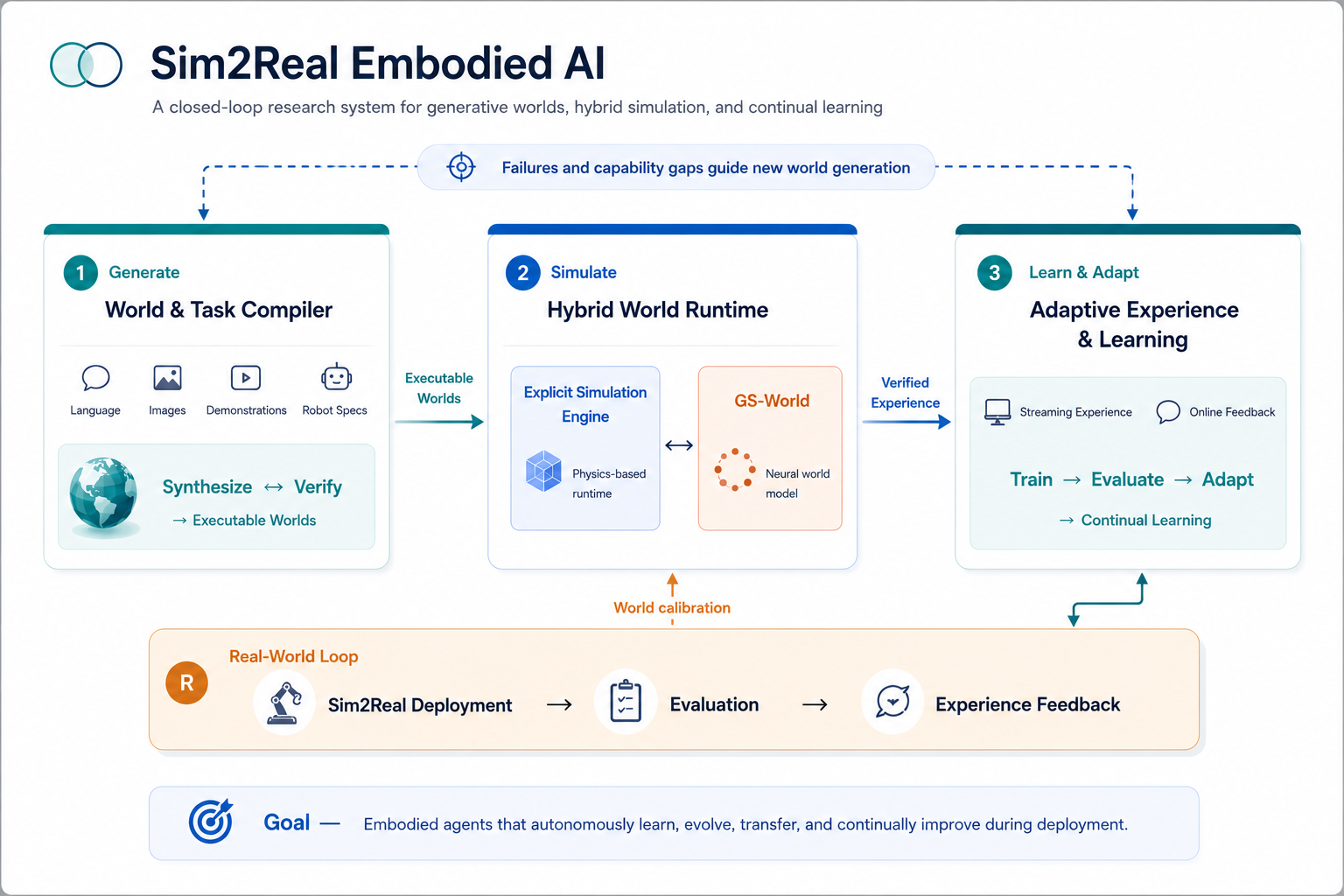
I build high-performance, scalable systems that connect generative worlds, hybrid simulation, and Sim2Real learning, enabling embodied agents to continually learn from their own rollouts in both simulated and real-world environments.
Background & Experience
Full CV →Education
- 2025 – Present CUHK-Shenzhen Ph.D. in Computer Science
- 2018 – 2019 NTU, Singapore M.Sc. in Signal Processing
- 2014 – 2018 UESTC / University of Glasgow Joint B.Eng. programme · First Class Honours (Glasgow)
Industry & Research
Head of Core Engine Team · DexForce
Aug 2022 – Aug 2025
Led core engine development for a Sim2Real embodied AI platform, spanning robot simulation and large-scale synthetic data generation.
Industry experience at Pudu, RVBUST, Appotronics, and Panasonic R&D.
Principal Investigator · RMB 4 million
Dec 2024 – Dec 2026
Lead simulator-based data generation, Real2Sim mapping, and multimodal dataset and skill database development for robot learning.
Collaborations & Opportunities
I welcome research or open source project collaborations on Embodied Intelligence and Simulation Infrastructure. If you’re interested in joint projects, code sharing, student internships, or industry partnerships, please contact me at yuecideng@link.cuhk.edu.cn.
Projects
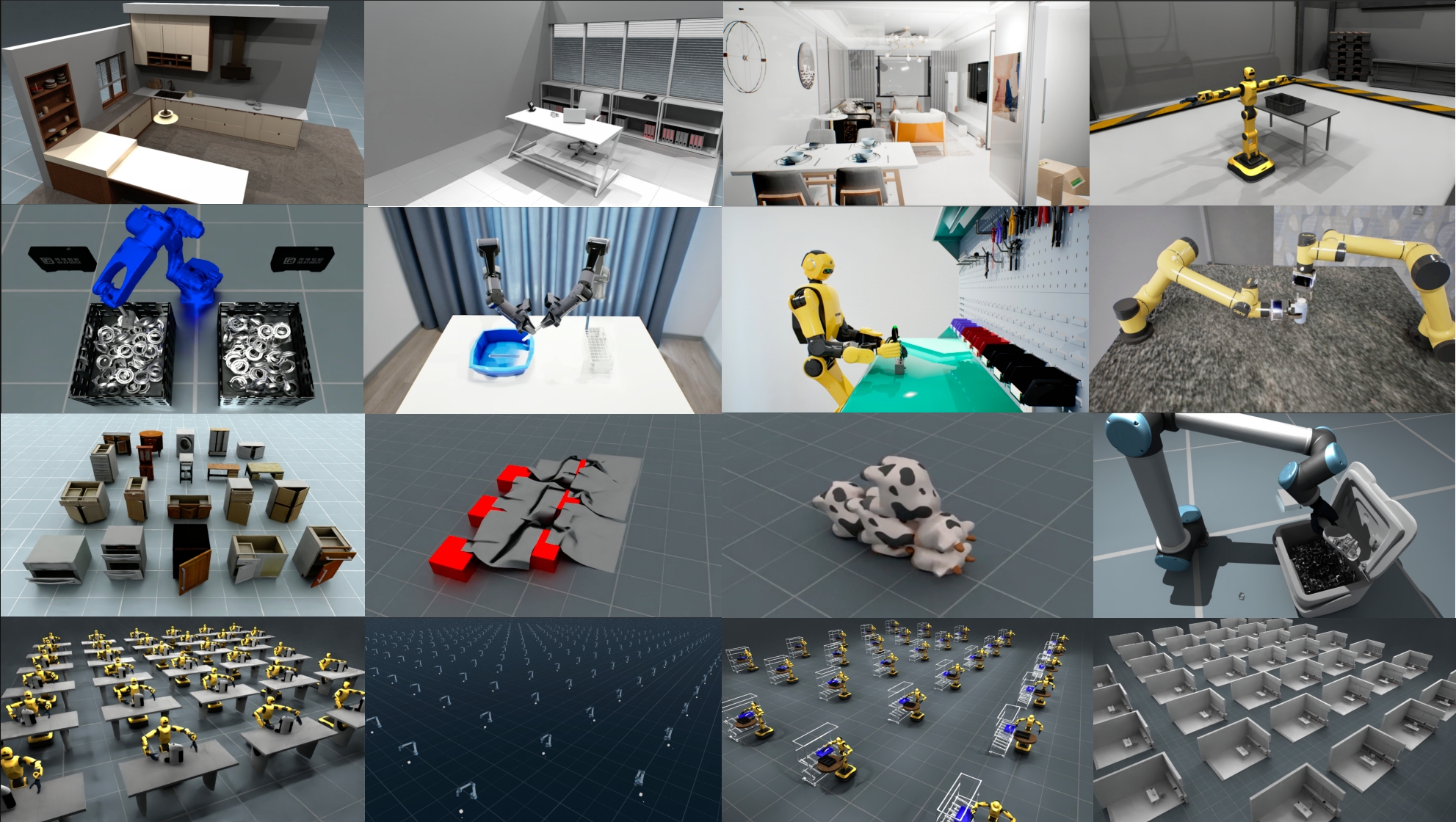
EmbodiChain: An end-to-end, GPU-accelerated, and modular platform for building generalized Embodied Intelligence
A modular, GPU-accelerated platform for simulation, synthetic data generation, and robot policy training and evaluation, supporting Sim2Real transfer.

Open3D: A Modern Library for 3D Data Processing
Collaborate on tensor-based geometry, 3D reconstruction, and the tensor backend of an open-source 3D data processing library.
Publications
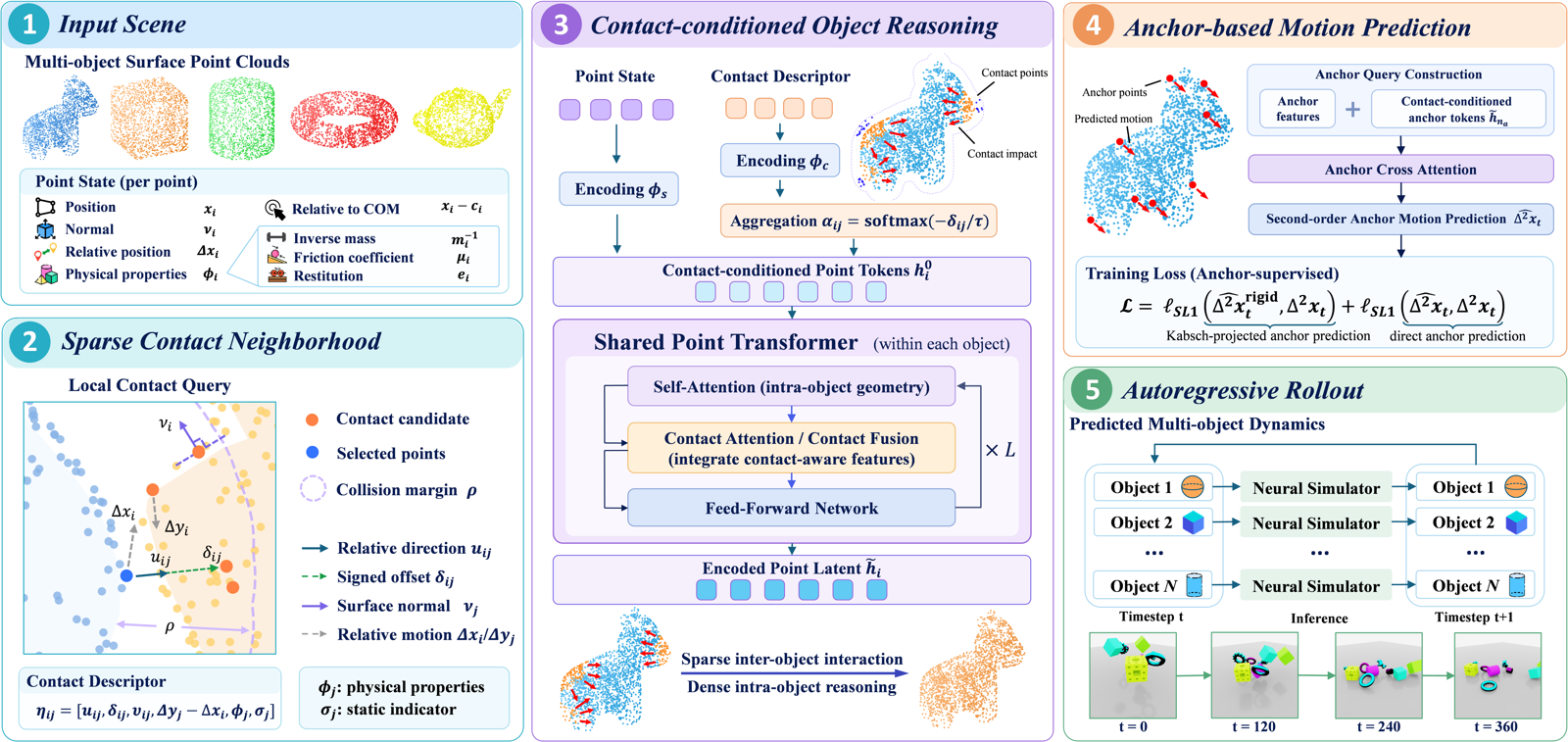
RiCo: Neural Simulation of Rigid-Body Interactions via Local Contact Reasoning
RiCo learns rigid-body dynamics through sparse local contact neighborhoods and intra-object reasoning, improving motion prediction and contact fidelity while generalizing zero-shot to scenes with 270 objects and showing preliminary sim-to-real transfer in multi-ball collisions.
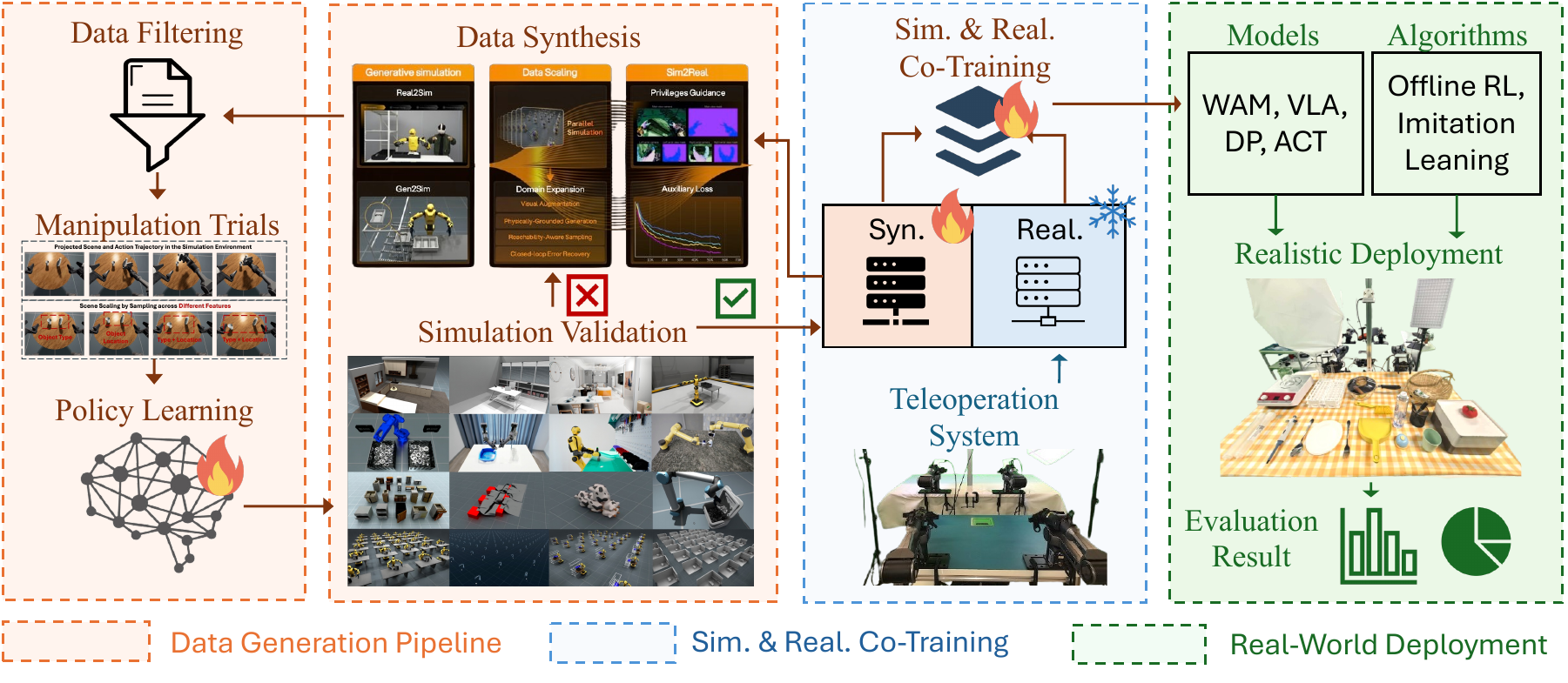
RoboSynChallenge: Mastering Real-World Dexterity via Generalizing Synthesized Manipulation Skills
A public benchmark for training robot manipulation policies with scalable synthetic data and limited real demonstrations, qualifying them in simulation, and evaluating their generalization on a standardized real-world dual-arm platform.
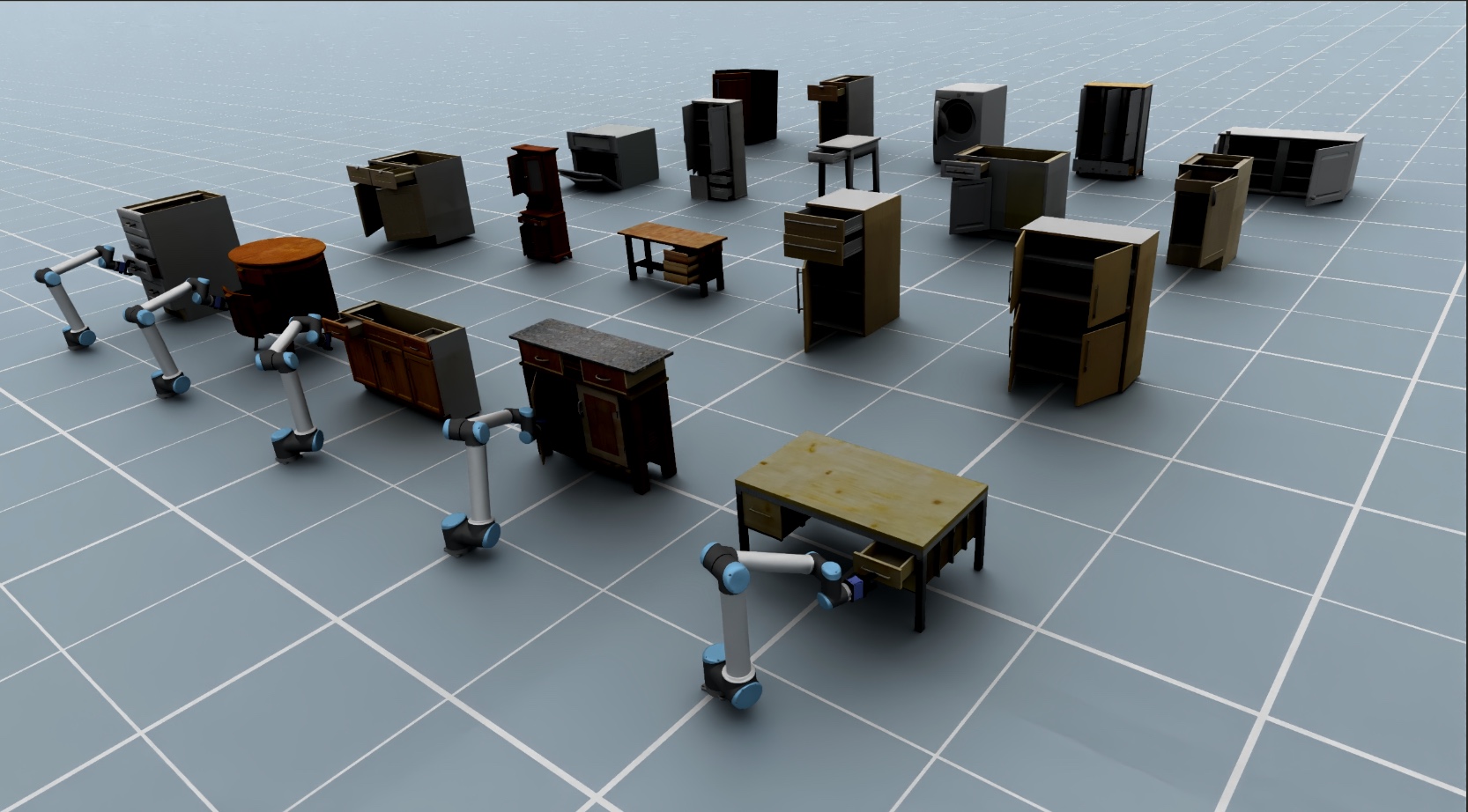
PAct: Part-Decomposed Single-View Articulated Object Generation
PAct generates complete, part-decomposed articulated 3D objects from a single-view image, synthesizing high-fidelity geometry and appearance while estimating kinematic structures for direct use in physics-based simulation.
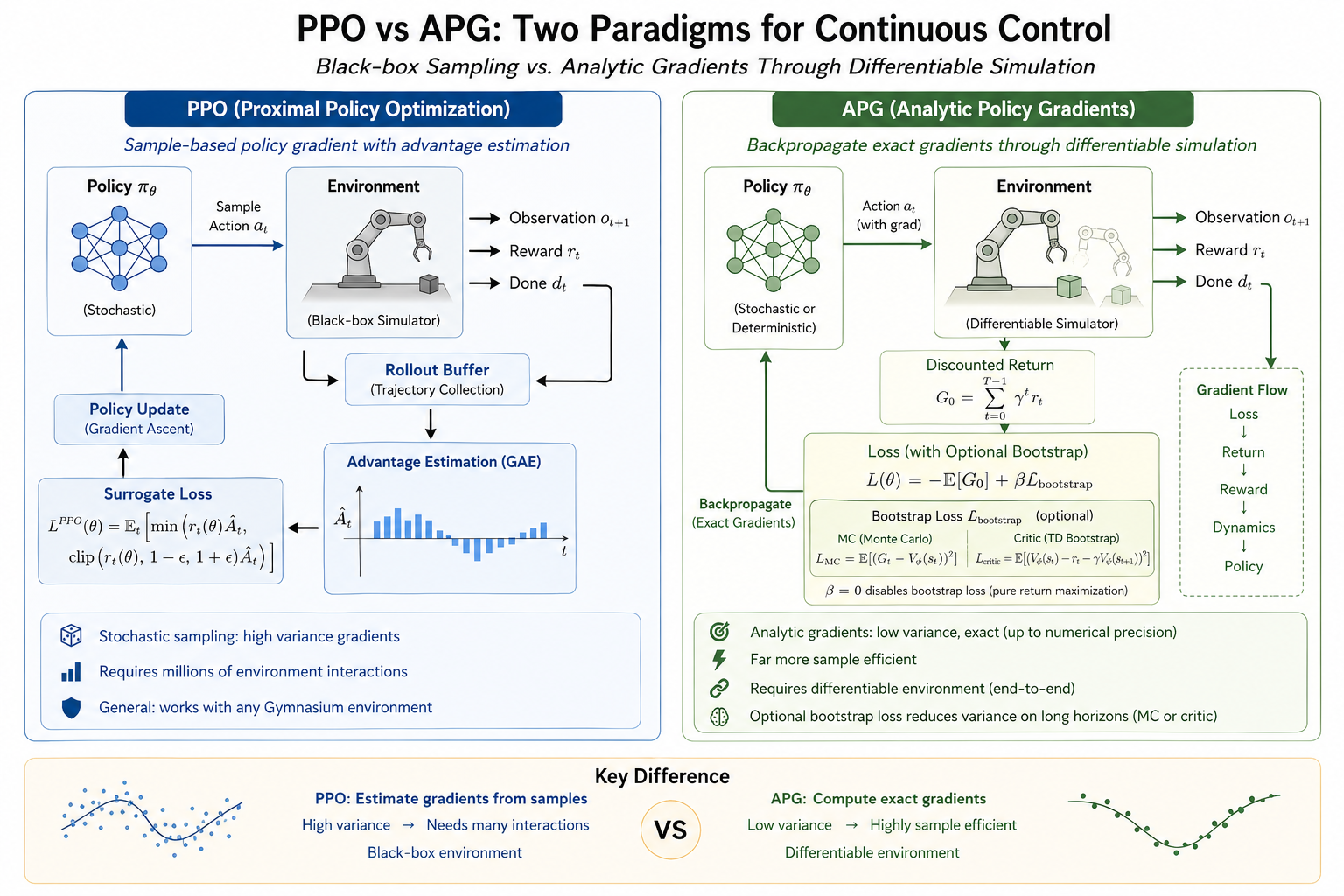
Backpropagating Through Simulation: Analytic Policy Gradients for Sample and Learning Efficient Differentiable Continuous Control
A differentiable-control benchmark and training framework that compares Analytic Policy Gradients with PPO across continuous control tasks, using backpropagation through simulation to study sample-efficient policy optimization.
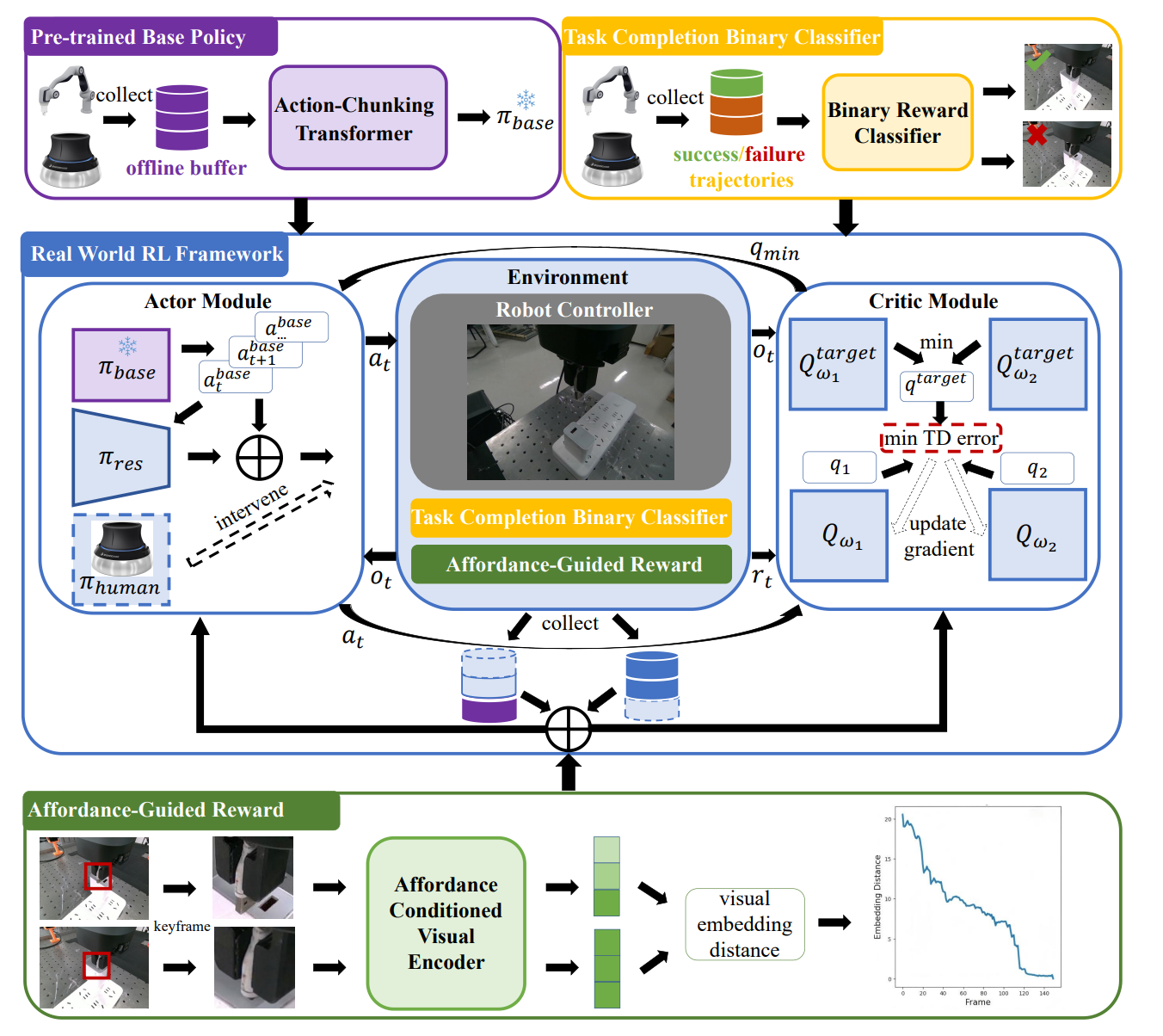
Focus-Then-Contact: Speeding Up Robotic Contact-Rich Task Learning with Affordance-Guided Real-World Residual Reinforcement Learning
A lightweight real-world RL method that uses residual RL and affordance-guided rewards to speed up contact-rich robot manipulation learning with minimal human-in-the-loop effort.
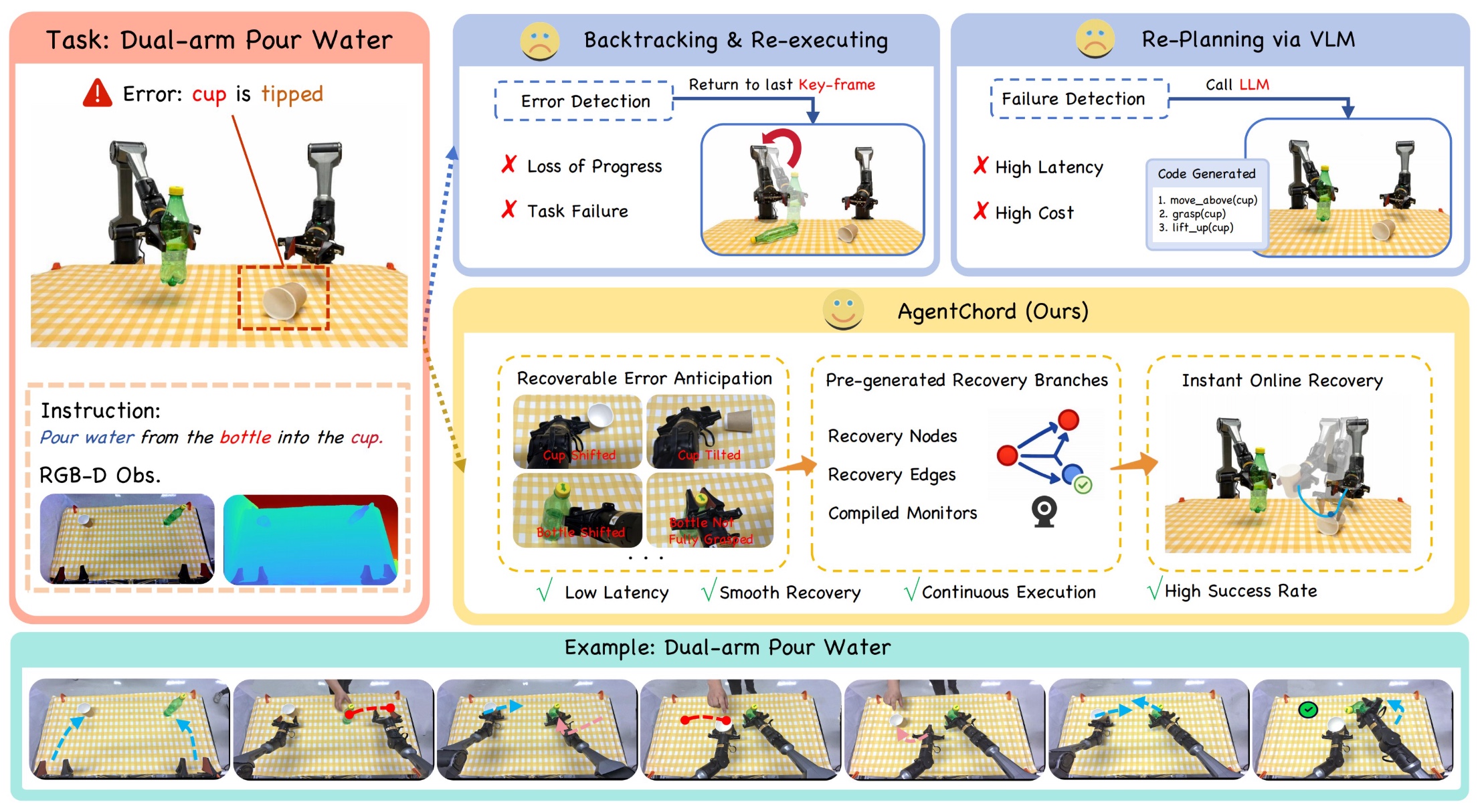
From Reaction to Anticipation: Proactive Failure Recovery through Agentic Task Graph for Robotic Manipulation
A recovery-aware task-graph system that helps real robots anticipate disturbances, switch to prepared recovery branches, and keep long-horizon manipulation moving.
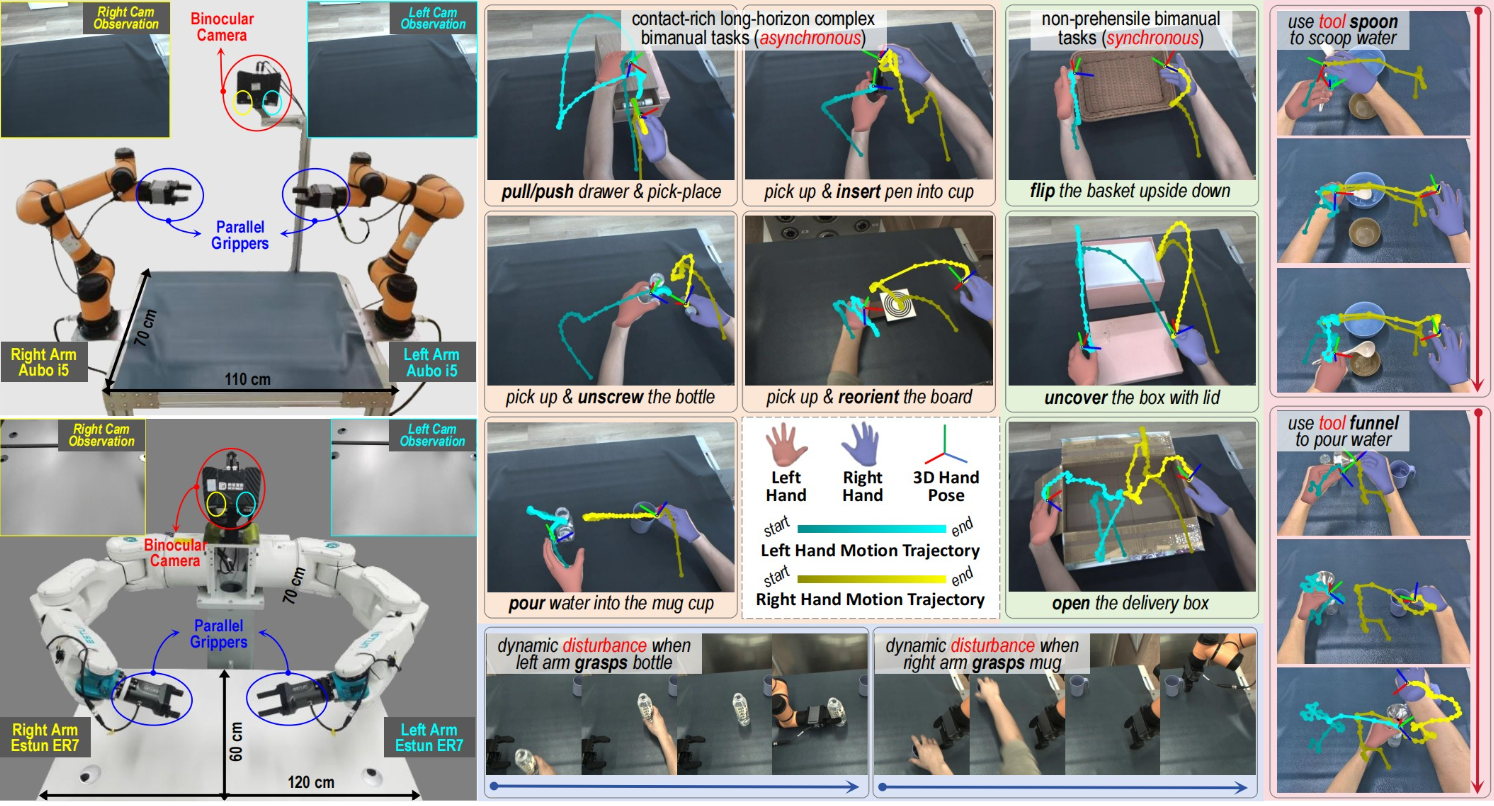
YOTO++: Learning Long-Horizon Closed-Loop Bimanual Manipulation from One-Shot Human Video Demonstrations
YOTO++ (extended from the conference version You Only Teach Once) enables cross-embodiment deployment (from the contralateral to humanoid dual-arm setups), and facilitates diverse bimanual tasks including asynchronous, synchronous and tool-using scenarios, with closed-loop control under dynamic disturbances during pre-grasping.
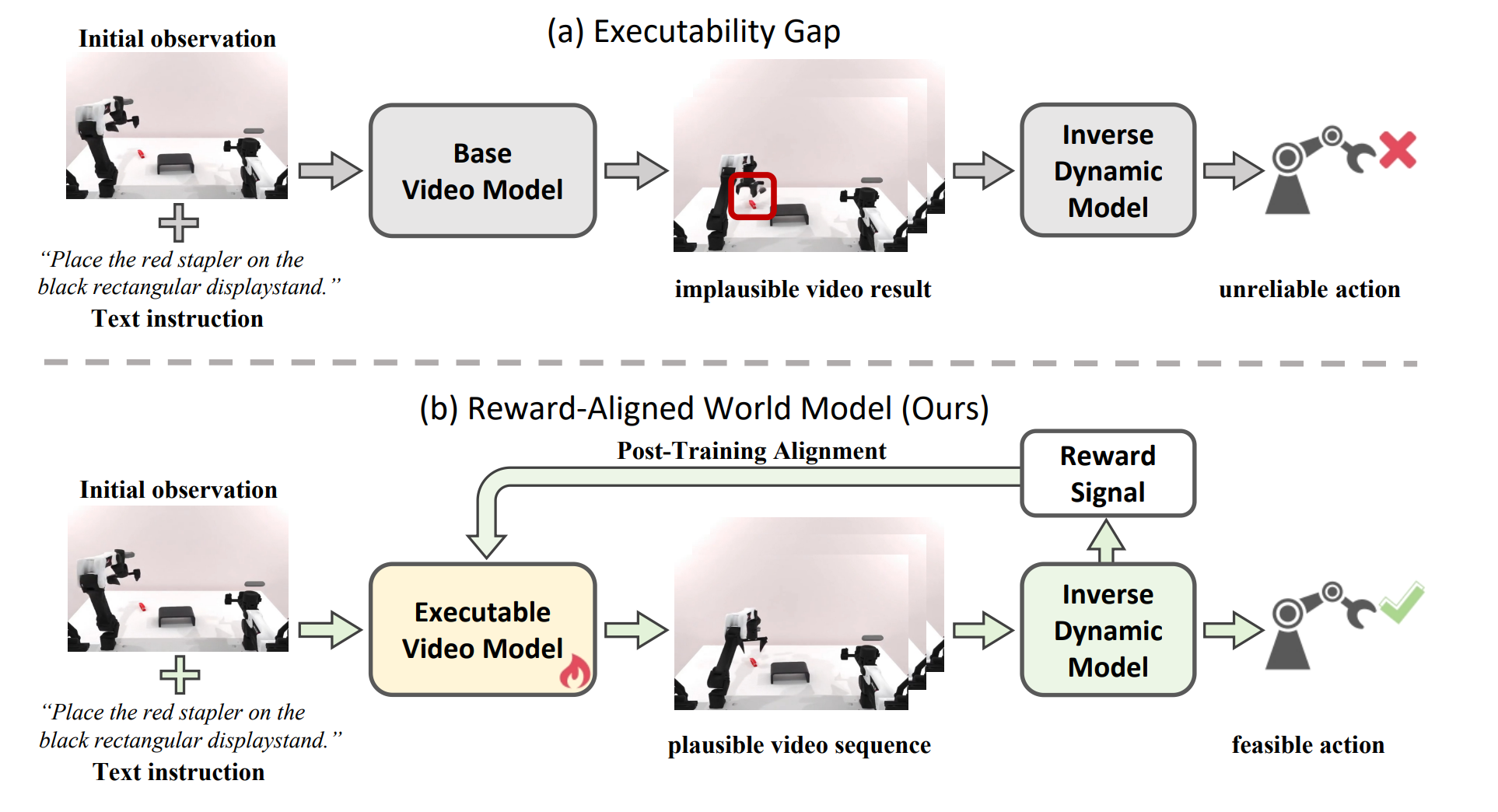
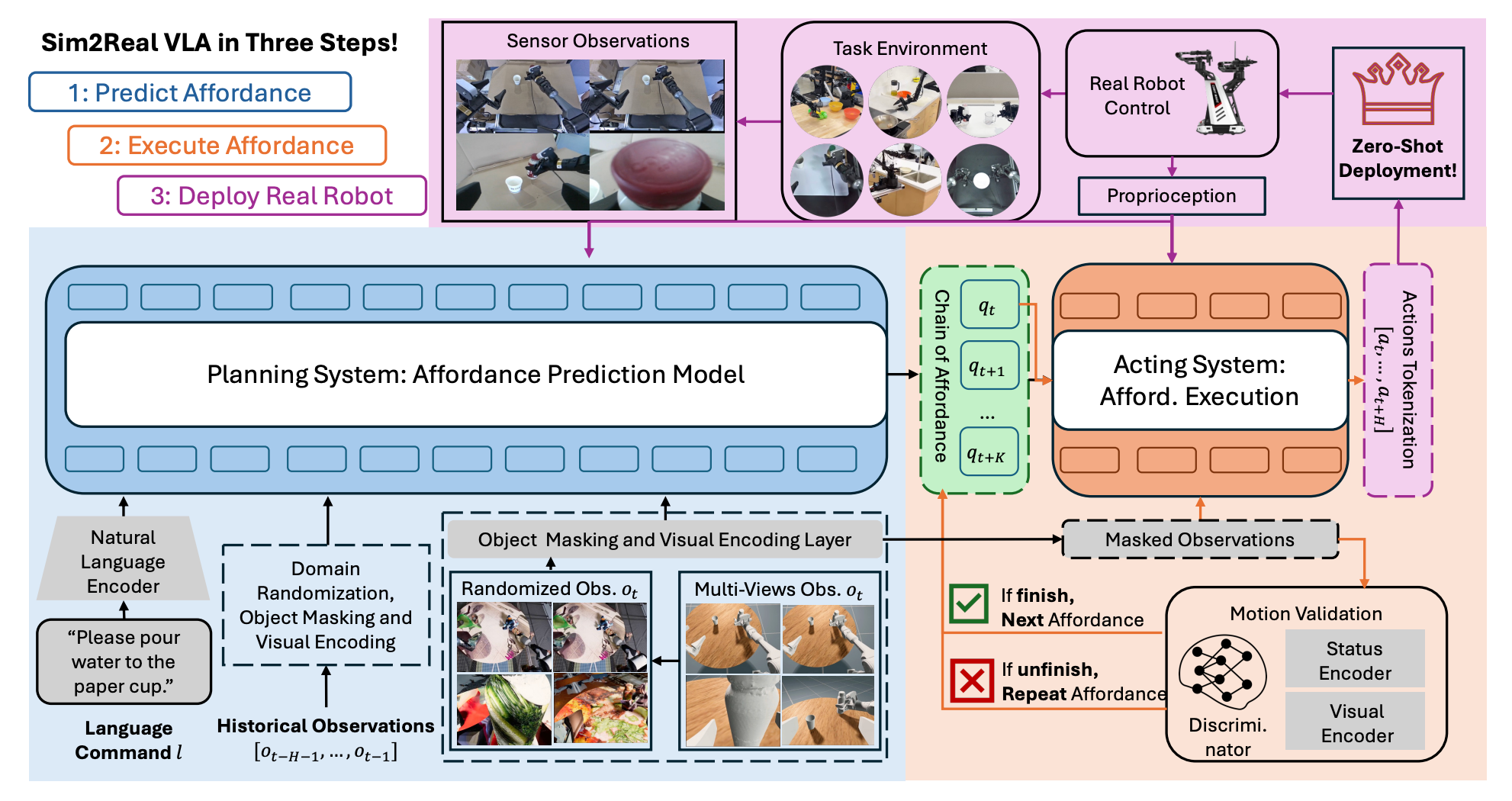
Sim2Real VLA: Zero-Shot Generalization of Synthesized Skills to Realistic Manipulation
This paper introduces Sim2Real-VLA, a generalist robotic control model that enables zero-shot transfer from synthetic simulation to real-world manipulation tasks.
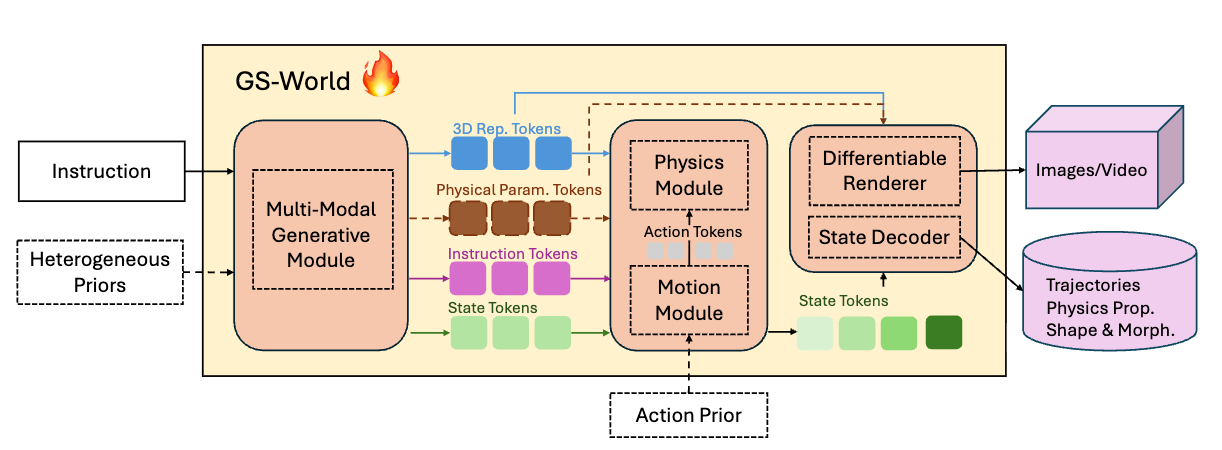
GS-World: An Engine-driven Learning Paradigm for Pursuing Embodied Intelligence using World Models of Generative Simulation
Position paper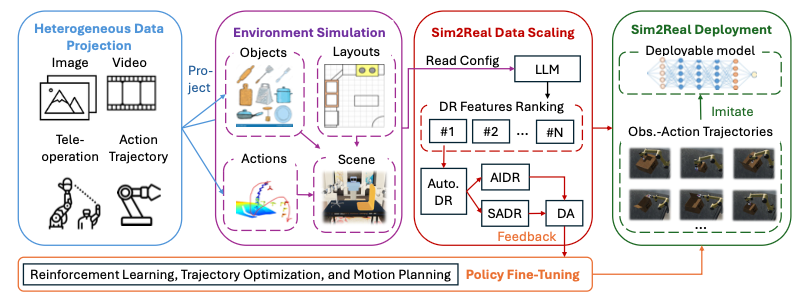
DexScale: Automating Data Scaling for Sim2Real Generalizable Robot Control
A novel data engine for automating data generation and scaling for sim-to-real transfer of robotic manipulation tasks.
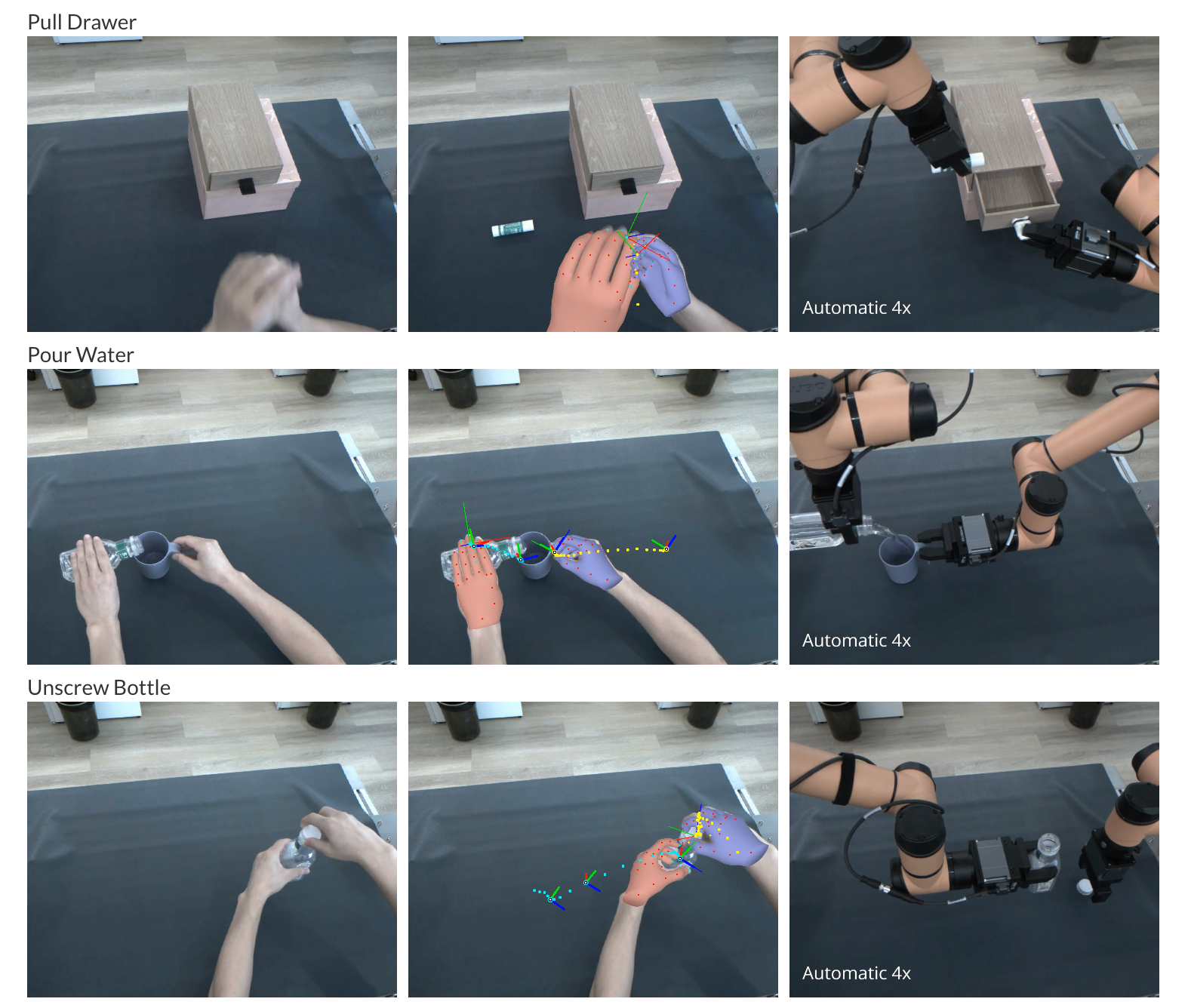
You Only Teach Once: Learn One-Shot Bimanual Robotic Manipulation from Video Demonstrations
This work proposes the YOTO (You Only Teach Once), which can extract and then inject patterns of bimanual actions from as few as a single binocular observation of hand movements, and teach dual robot arms various complex tasks.